Small Group Teide National Park Volcanic and Forest Wonders: An Honest Review and Tips from a Local Guide
I Didn't Expect Activities and Excursions in Tenerife to Feel Like This
I've been guiding on Teide for ten years. I've seen thousands of people ride the cable car up, take the obligatory photo at La Rambleta and come back down without having understood anything about what lies beneath their feet. The volcanic landscape isn't just scenery: it's an open book of geology, but most people flip through it without reading a single page.
We earn a commission when you book through our links on Viator (PID P00303273), at no extra cost to you. This is how we keep the site free. Learn more →
That's why, when a client asked me for a recommendation for an excursion that wasn't the typical cable car plus selfie routine, I suggested the Small Group Teide National Park Volcanic and Forest Wonders. And I decided to join him, because I needed to see with my own eyes whether the tour lived up to what it promised.
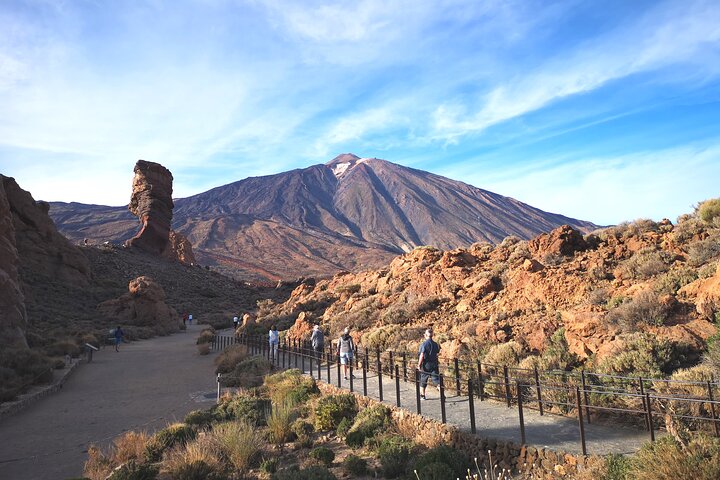
The experience was different from everything I had seen in the mass-tourism groups. There were no lines, no rushing. The guide, a local geologist, stopped at every change in color in the volcanic ground: the black of the basalt, the red of oxidation, the ochre of ancient fumaroles. Instead of rushing to the next viewpoint, we spent twenty minutes in a single spot, understanding why the lava had formed those structures. For someone who has walked these same rocks hundreds of times, it felt like rediscovering the park.
Small Group Teide National Park Volcanic and Forest Wonders: The Tour That Saved My Trip
The tour does not go up to the summit. That's the first thing to understand. Many clients arrive in Tenerife set on reaching the top of Teide, but the summit permit (free, 200 per day, booked out months in advance) is a real obstacle. This tour operates below 2,500 meters, which means you don't need a permit, you don't suffer altitude sickness, and above all, you don't end up disappointed at the upper station unable to continue.
The group had eight people, with a maximum of twelve under the operator's policy. We were picked up in a comfortable minibus in Costa Adeje at 08:30. The route went up the TF-21 from Vilaflor, which is, without question, the top way to approach Teide: the road gains altitude gradually, and the landscape shifts from Canary pines to broom shrubs and finally to black rock. The guide told the story of each eruption while pointing out the secondary volcanic cones. In two hours I learned more geology than in all my years of self-taught study.
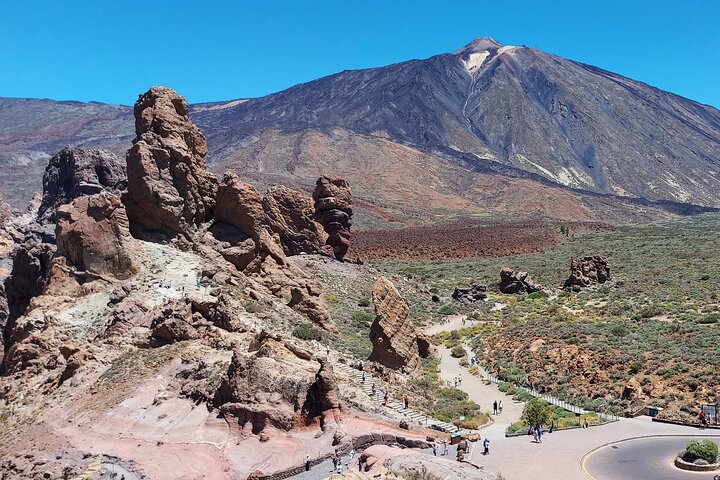
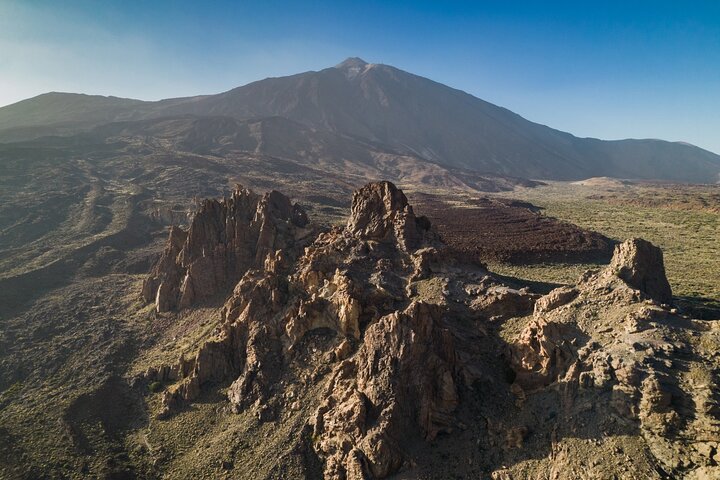
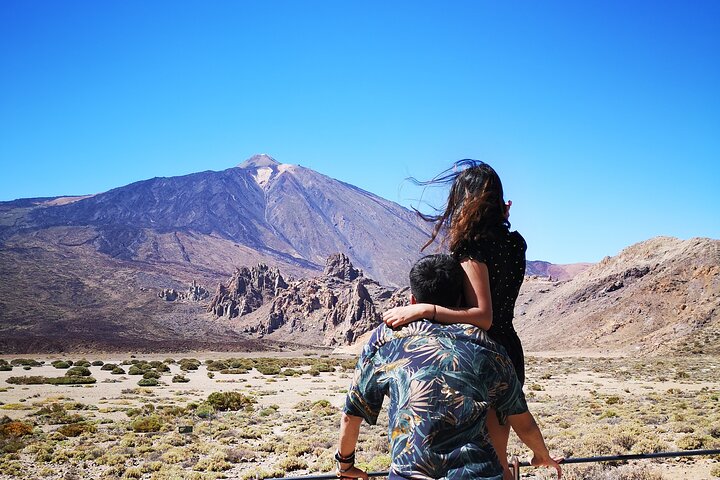
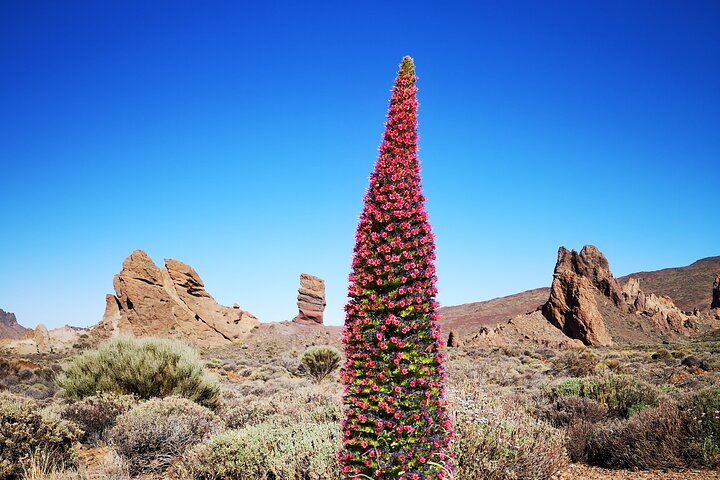
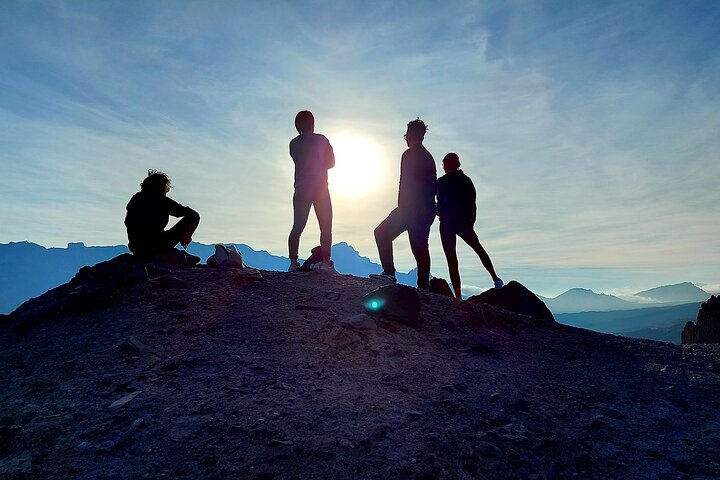
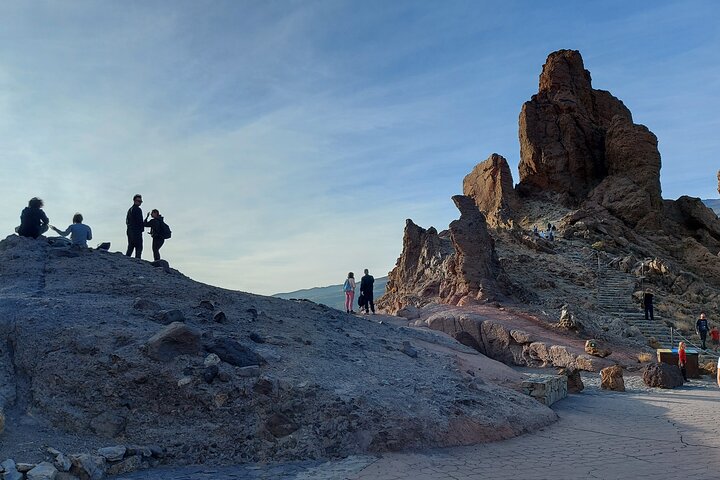
The main stop was at the Roques de García, that group of rock formations that look as though they were carved by an abstract artist. But the guide took us along a secondary path, away from the main viewpoint where the buses crowd together. There, among blocks of phonolite, he explained to me how differential erosion had created those silhouettes. The wind was blowing hard, but the March sun was warm enough to be comfortable in long sleeves. I wore my windbreaker, essential at 2,100 meters even in spring.
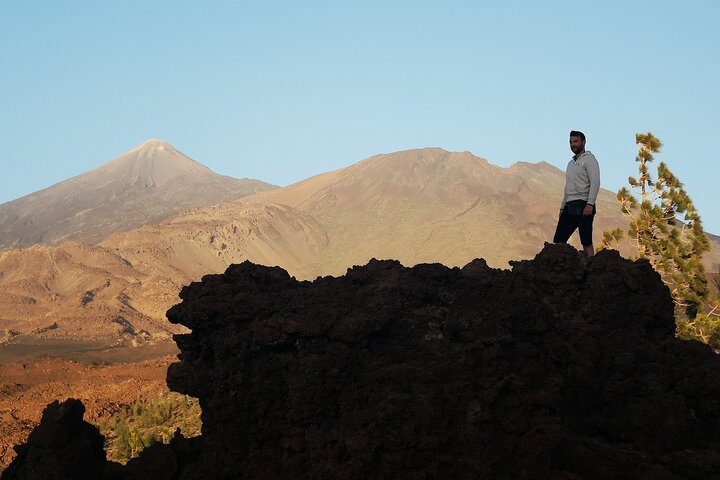
After the Roques, the tour included a visit to the Chinyero lava fields, the site of Tenerife's most recent eruption (1909). Walking over that century-old lava, still sharp and crunching underfoot, is an experience no cable car can give you. The guide pointed out the lichens beginning to colonize the rock: the first step of life returning to the volcano. It reminded me of my first ascent of Teide in January 2012, when I started too late and missed the finest morning light. Up there, at 3,715 meters, everything is rock and sky. But down here, in the Chinyero lava, life is fighting to come back. It's a different kind of beauty.
The Moments That Made It Worthwhile
There was one specific moment when the tour justified every euro. We were at a secondary viewpoint, with no one else around, looking out over the La Orotava valley. The guide pulled out a tablet with old topographic maps and showed us how the valley had formed from a massive landslide hundreds of thousands of years ago. The comparison with the current map was striking: the same shape, but the valley had been carved by the sea and time. In that moment, the landscape stopped being a postcard and became a story.
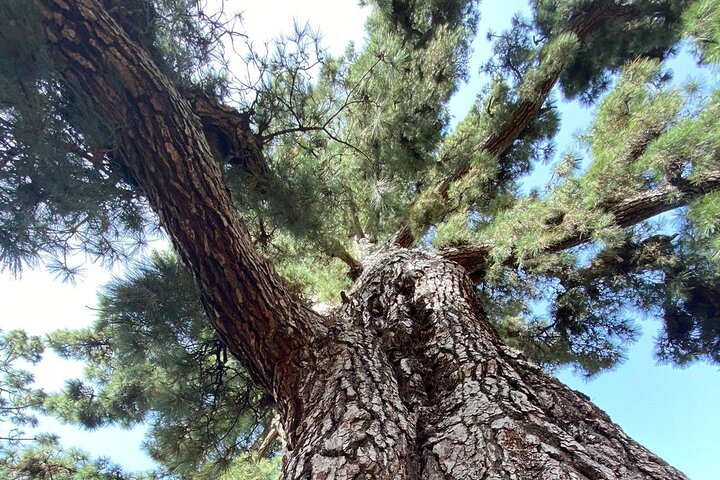
The second part of the tour took us to the Corona Forestal forest, an area of Canary pine that many tourists overlook. The contrast with the volcanic landscape was stark: from black and red rock we moved to a floor of pine needles, shade, and the smell of resin. The guide explained how the Canary pine survives eruptions: its thick bark and its ability to resprout after fire make it a natural survivor. As I walked among the trees, I remembered an afternoon in November 2018 in Anaga, when the fog disoriented me and I had to spend 40 minutes backtracking through ferns. There, in the Corona forest, there was no fog, but the lesson was the same: the Tenerife landscape always holds a surprise, and only those who take the time to listen discover it.
A Lesser-Known Excursion Worth Discovering
If the Teide tour weren't enough, there's another option that combines volcanic nature with laurel forest: the Small Group Teide National Park Volcanic and Forest Wonders also includes a stop at Monte de El Agua, a transition forest between Canary pine and laurisilva. It isn't Anaga, but it comes close: moss-covered trees, giant ferns, and a silence broken only by the song of the blue chaffinch. For those who don't have time to reach the Anaga massif, this stop is a good substitute. The guide pointed out a booted eagle's nest high up in a pine tree, and we spent ten minutes watching with binoculars as the bird circled. These are details that don't appear in the brochures.
What Really Surprised Me
What surprised me most was the way time was managed. In most mass-tourism tours, you spend more time waiting for the group than enjoying the scenery. Here, because it was a small group, downtime was minimal. The guide adjusted the pace to the group: if someone wanted more time at a viewpoint, he gave it. If it was cold or windy, he sped things up. That kind of flexibility is impossible on buses carrying 50 people.
I was also surprised by the quality of the information. It wasn't the typical memorized speech about "this rock is 5 million years old." The guide answered specific questions: "Why is the lava here black and over there red?" (answer: the iron content and the cooling speed). "What are the chances of a new eruption?" (answer: high in geological terms, low on a human scale). He spoke with the confidence of someone who has studied the terrain for years, not someone reading from a script.
The food was another highlight. Not a cold picnic on a bench, but lunch at a local restaurant in Vilaflor, with wrinkled potatoes, mojo sauce and goat meat. The house wine, a young listán negro, was exactly what you needed after a morning outdoors. The restaurant wasn't listed in the tourist guides; it was a place where the park workers eat. Those details make the difference.
Alejandro Vega's Tips to Get It Right
- Layered clothing: At 2,000 meters, the temperature can vary by 15°C between shade and sun, and the wind multiplies how cold it feels. Bring a technical base layer, a fleece and a windbreaker. In winter, add a padded jacket. I've seen tourists in shorts and flip-flops on Teide in January. Don't be that tourist.
- Enough water: Humidity on Teide is around 15 to 25 percent. You dehydrate without noticing because you don't sweat. Bring at least 1.5 liters per person for the excursion. The tour includes water, but it's better to bring extra.
- Suitable footwear: You don't need technical mountain boots, but trail shoes with good grip are essential. Loose volcanic ground is treacherous, and the Chinyero lava cuts like knives if you're wearing street shoes.
- Sun protection: At 2,000 meters, UV radiation is 30 percent more intense than on the coast. In addition, the volcanic ground reflects the light. SPF 50+ sunscreen and sunglasses with UV filter. Not negotiable.
- Check the Teide webcam: Before heading out, check the camera at volcanoteide.com. If the summit is clouded over, the landscape is reduced to gray fog. Better to reschedule. The tour has a flexible cancellation policy.
- Have breakfast first: Café Melita in Vilaflor (the highest town in Spain, at 1,400 m) opens at 07:30. Their barraquito with condensed milk and Licor 43 is an ideal way to prepare for a day of excursion. Order a potato tortilla too. It will give you energy for the whole morning.
What I Wish I Had Known Before Going
If I could go back and give advice to my younger self, I would say not to underestimate the cold on Teide even in summer. On a July excursion, when it's 30°C on the coast, at 2,200 meters you can have 15°C with 40 km/h winds. The wind chill drops to 10°C or lower. Always bring an extra layer even if the forecast says sun.
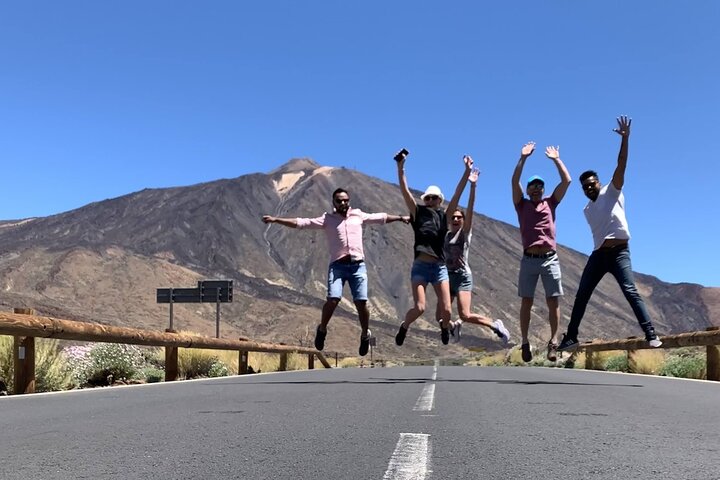
I also wish I had known that the tour doesn't include the cable car, and that it doesn't need it. Many travelers think that to see Teide you have to ride the cable car up, but the national park has much more to offer at mid altitude. The Roques de García, the Chinyero lava fields, the Canary pine forests: all of that is below 2,500 meters and is just as spectacular. In fact, from the viewpoints at 2,100 meters you get a panoramic view of the peak that you don't get when you're up top. Don't get fixated on the summit.
Finally, something I learned on my first ascent of Teide in 2012: morning light is the finest for photography. The tour leaves at 08:30, but if you could leave at 07:00, you would get golden light on the rocks that is priceless. Ask the operator whether an earlier departure is possible. Sometimes they do it if the group requests it.
And one extra tip: if you're traveling in winter, have a plan B. Teide is a gamble in December through February. Wind can shut down the cable car, and snow can block the roads. If the tour gets canceled due to weather, don't get frustrated. Drive toward Anaga: the laurel forest in fog is just as remarkable. I did this once in February 2021, with four British clients who had flown in just to see Teide. We ended up eating at a guachinche in Tegueste with no listing on Google Maps, and it was one of the finest days of my life as a guide.
Photo Gallery
Frequently Asked Questions
Do I need a permit for this tour?
No. The tour operates below 2,500 meters, so it does not require the Teide summit permit (which is only needed to climb to the peak, at 3,715 m). This makes it an ideal option if you weren't able to get the permit or if you prefer to avoid the altitude.
How long does the excursion last?
The total duration is approximately 8 hours, including transport from Costa Adeje, stops at the Roques de García, the Chinyero lava fields, the Corona Forestal forest, and lunch at a local restaurant in Vilaflor.
Is it suitable for children?
Yes, as long as children are at least 6 to 7 years old and used to walking. The walking distances are short (a maximum of 2 to 3 km in total), but the terrain is uneven and requires attention. Not recommended for children who need a stroller or who tire quickly.
What does the meal include?
The tour includes lunch at a local restaurant in Vilaflor. It usually consists of wrinkled potatoes with mojo sauce, goat or chicken, and dessert. Drinks (water, wine or soda) are included. A vegetarian option is available if requested in advance.
Can I cancel if the weather is bad?
Yes, the operator has a flexible cancellation policy. If the weather is adverse (strong wind, rain, calima), you can cancel with 24 hours' notice and receive a full refund. They can also reschedule the excursion for another day.
Who is this tour NOT for?
It is not for those who want to climb to the peak of Teide (you'll need a different tour with a summit permit). It's also not for those looking for an extreme adventure excursion: the walks are gentle and the pace is relaxed. If you prefer adrenaline, a kayaking or paragliding tour would be a better fit. It's also not ideal for those with serious mobility issues, since it involves walking on uneven terrain.
Small Group Teide National Park Volcanic and Forest Wonders
The top non-summit Teide tour for curious travelers who want to understand volcanic geology. Maximum group of 12 people, geologist guide, stops at Roques de García and the Chinyero lava fields. Includes lunch at a local restaurant. Ideal if you don't have a summit permit or prefer to avoid the altitude. Not for those who want to climb to the peak.
Small Group Teide National Park Volcanic and Forest WondersTeide National Park, Dinner, Sunset & Stargazing Coach Tour
2834 reviews · 4.77★ avg · from €74/person
Top-rated experience in the area. Great reviews, excellent value.
Check Availability →Leaders in Eco Respectful No chase whale and dolphin encounters
2224 reviews · 4.59★ avg · from €28/person
Top-rated experience in the area. Great reviews, excellent value.
Check Availability →Explore More
Related comparisons and guides: