Local Wisdom, The Day I Saw 50 Pilot Whales
October 2019, Costa Adeje. I was on a catamaran with a marine biologist named Yurena who has been studying Tenerife's cetaceans for 15 years. We were watching a small pod of bottlenose dolphins when Yurena went quiet. She was staring at the hydrophone readout. "Pilot whales," she said. "A big pod." Within ten minutes, we were surrounded. Fifty short-finned pilot whales, calves, juveniles, massive bulls, logging at the surface, spy-hopping to look at us, diving in synchrony. The engine was off. The only sound was their breathing. Yurena was nearly in tears. "In 15 years," she said, "I have seen a pod this size maybe four times." Tenerife's whales are resident, not passing through, this is one of the few places in the world where pilot whales live year-round. But crowds change the experience. Book the 9 AM departure, not the 11 AM. The morning light is better, the sea is calmer, and you get an extra 30 minutes on the water before the afternoon catamarans arrive.
Resident Whales, Not Migrating, Living Here
We earn a commission when you book through our links on Viator, at no extra cost to you. This is how we keep the site free. Learn more →
The first time I saw whales from a hiking trail, I was on the Punta de Teno coastal path in the Teno Massif. I stopped at the lighthouse lookout and saw pilot whales surfacing about 200 metres offshore, their dorsal fins cutting the surface in a rhythm I'd only ever seen from a boat before. Tenerife is one of the few places on Earth where you can see whales from both the trail and the boat. I recommend booking the Whale Watching Eco-Adventure from Costa Adeje, hearing the pilot whales click and whistle through the underwater microphone transforms the experience from sightseeing to connection.
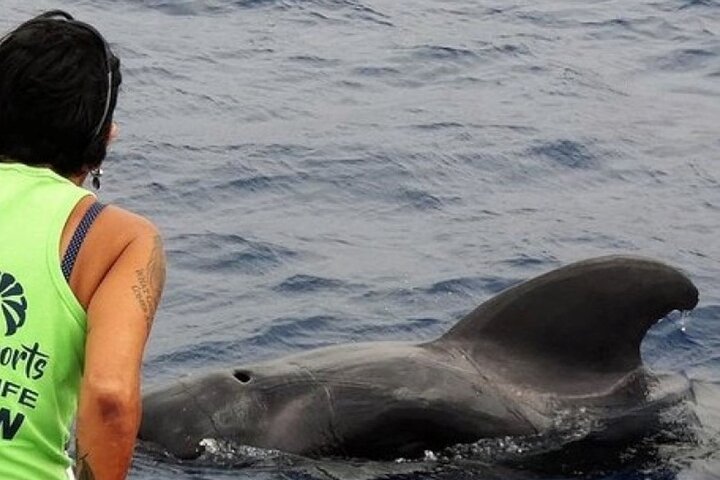
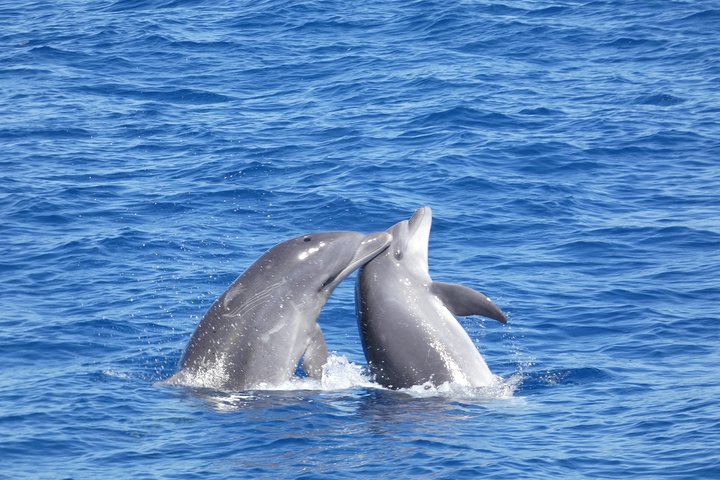
The stretch of water between Tenerife and La Gomera holds a permanent resident pod of around 500 pilot whales, not migrating through, living here year-round. Most whale watching destinations have seasons; Tenerife has residents. You'll also see bottlenose and common dolphins on most trips, and if you're lucky, sea turtles surfacing beside the boat. The sighting rate is over 95%, the highest in Europe.
Tours leave from Los Cristianos, Puerto Colón, and Puerto de la Cruz. The south-west coast is generally calmest in the morning before the trade winds pick up around midday. A catamaran with a hydrophone, an underwater microphone that lets you hear the whales clicking and whistling, adds another layer to the experience. The pilot whales are especially vocal, and hearing their calls underwater changes how you see them. It's one thing to watch a whale surface; it's another to hear it talking to its family.
I joined a British family of four on a morning catamaran last spring. The mother had been nervous about bringing her two young sons, worried they would get bored or seasick. Then a pod of bottlenose dolphins started riding the bow wave, the boys were at the rail for the entire three hours, and the mother told me later that the hydrophone audio of the pilot whales had been playing on repeat in their rental car every day since.
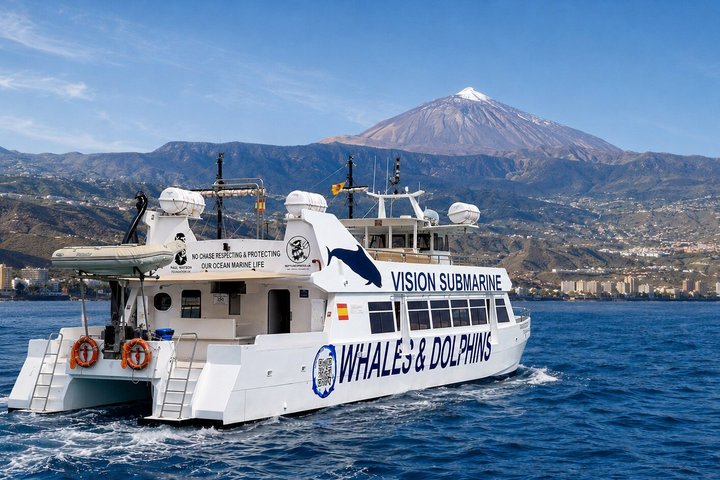
Catamaran, RIB, or Sailing Yacht, Which Is Right for You?
Catamaran vs RIB, which boat is right for you? → Full comparison of stability, speed, price, and ride quality for Tenerife whale watching.
| Boat Type | Capacity | Price | Ride | Right For |
|---|---|---|---|---|
| Catamaran | 40-80 pax | €38-55 | Most stable, comfortable in swell | Families, seasickness-prone, photography |
| RIB / Speedboat | Max 12 pax | €70 | Fast, bumpy, eye-level with water | Proximity to whales. NOT suitable for seasickness or young children |
| Sailing Yacht | Max 12 pax | €72 | Wind-powered, intimate, quiet | Couples or small groups who value atmosphere over speed |
Watching Responsibly, How to Choose an Ethical Tour
Operators must maintain distance from the whales, no chasing, no encircling, no approaching from directly ahead. The resident pod is vulnerable because they don't leave the area; they're exposed to boat traffic every day. Choose operators who respect the guidelines and employ guides who switch off engines near the animals. Morning departures (9-10 AM) have calmer seas and less disturbance.
I've seen boats get too close. The responsible operators don't. A hydrophone-equipped tour is usually a sign of a more conscientious operator, they're invested in education, not just sightseeing.
Read the full ethical whale watching guide →, Legal rules, operator red flags, vessel impact comparison, and how to pick a tour that respects the resident pod.
When to Go
Year-round, but morning departures (9-10 AM) are suitable for calm seas. Winter months (December to February) have choppier conditions, choose a larger catamaran for stability. Most operators offer free cancellation up to 24 hours ahead, so you can book during peak season without worrying about weather.
, The hydrophone lets you hear the pilot whales clicking and whistling underwater, and the marine biologist guide adds depth to every sighting. An excellent balance of quality, comfort, and price.
What to Bring Whale Watching
Windproof jacket: The Atlantic breeze at speed is cold even in August. Sunscreen and sunglasses: Glare off the water doubles UV exposure, Tenerife's UV index hits 11+ in summer. Seasickness medication: Take it 30 minutes before departure. The swell between Tenerife and La Gomera is no joke. Camera with a strap: You will want both hands free when the boat moves. Water: Most boats do not provide it. No bananas on board: Old sailor superstition, some skippers genuinely enforce this.
Top Whale Watching Picks
After reviewing all the available tours in this category, here are the experiences I recommend most, based on quality, value, and the type of traveller each suits.
Whale Watching Eco-Adventure from Costa Adeje
Wildlife enthusiasts who want the full experience ⚠ Only 40 spots per tripThis is the tour I recommend most often to visitors who want more than a boat ride. The catamaran is purpose-built for whale watching, wider and more stable than the standard tourist catamarans, and the crew includes a marine biologist who provides commentary throughout. The hydrophone is the standout feature: the pilot whales in this area are unusually vocal, and hearing their clicks and whistles through the underwater microphone changes how you experience the encounter. The tour also stops at a secluded cove for swimming. The morning departure (9am) has calmer seas and better lighting for photos.
Whale watching RIB
Adventure seekers who want speed and proximityA rigid inflatable boat (RIB) gets you closer to the action than a catamaran can. These boats are fast, expect to cover more coastline in two hours than a catamaran does in three, and the low profile means you're at eye level with the water. The trade-off is comfort: it's a bumpier ride, and you will get sprayed. Not suitable if you're prone to seasickness or travelling with young children. But if you want to feel the Atlantic and see whales from a few metres away rather than from a deck, this is the option. Life jackets are provided and the skippers are all licensed.
Leaders in Eco Whale & Dolphin
Travellers who want two activities in one tripThis tour combines a whale watching cruise with a snorkelling stop at a marine reserve along the south-west coast. The whale watching portion follows the standard route past Los Cristianos and toward La Gomera, and the snorkelling stop is at a protected cove where the water clarity is consistently good. The boat is a mid-sized catamaran (around 40 passengers), which feels less crowded than the budget option but still affordable. Snorkelling equipment is included, and the crew helps first-timers get comfortable in the water. Worth noting: the snorkelling stop depends on sea conditions, so it's not always possible in winter months.
Who These Tours Are NOT For
Whale watching tours aren't suitable if you're prone to severe seasickness, even on calm days, the Atlantic has a constant swell. If you're short on time in Tenerife (less than a full day), prioritise Teide or hiking over a boat tour. Children under three may find the longer tours tiring, though most operators allow infants at no charge. I'd also say skip the afternoon departures if you are prone to nausea, the trade winds pick up around midday and the swell gets noticeably rougher. And do not book a RIB if your priority is comfort or photography; the bumpy ride makes framing a shot nearly impossible and the spray soaks your lens.
Whale Watching Eco-Adventure from Costa Adeje
2181 reviews · 5.0 stars
Whale Watching Eco-Adventure from Costa Adeje, 2181 verified reviews, 5.0★ average rating.
Book on Viator →Whale watching and listening Eco-Catamaran Tour with Food Tasting
1489 reviews · 4.9 stars
Whale watching and listening Eco-Catamaran Tour with Food Tasting, 1489 verified reviews, 4.9★ average rating.
Book on Viator →Explore More
Related comparisons and guides:

Compare boat types: Catamaran vs RIB, which is right for you? →