I've guided the Masca Gorge trail over 80 times. I've walked Barranco del Infierno more times than I can count, probably 150-plus, including the years before the permit system existed. These are the two most searched ravine hikes on Tenerife, but they're not competitors. They serve completely different hikers.
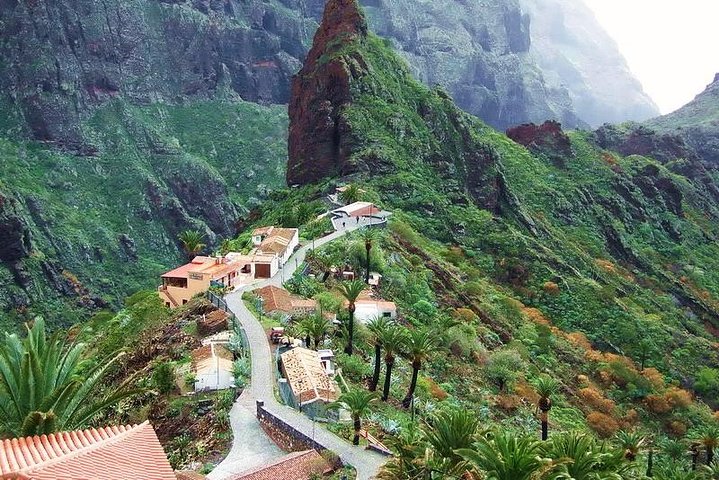
Masca is a full-day expedition through a narrow canyon that ends at a beach with no road access. You descend 600m, wade through water, scramble over boulders, and exit by boat. Barranco del Infierno is a gentle 4.5km return walk to a waterfall, with a paved path for most of the route. One demands respect. The other is a lovely morning stroll.
Here's the comparison I wish existed when I started guiding, honest about the tradeoffs, specific about the logistics, and clear about who each trail is for.
I Did Both: Where They Really Differ
I first walked Barranco del Infierno in 2010, before the €5 entry and the 300-person daily limit. Back then, you just showed up. Now you book online in advance, and you should, because it sells out most days in peak season. The trail starts in Adeje, climbs gently through a dry riverbed, and ends at a 30m waterfall that's impressive after rain, a trickle by August.
Masca I first guided in 2013, the year before it became the island's most famous hike. The trail was rougher then, less reinforcement, no hard hats, no permit system. After the 2021-2023 closure for trail reinforcements, it reopened with stricter protocols. You now need a permit or a guided tour, and you must wear a hard hat (issued at the checkpoint). The boat pickup at the beach end is mandatory, there's no other way out.
The key difference isn't difficulty. It's commitment. Masca is a one-way descent: once you drop into the gorge, you're going to the beach. There's no turning back after the first 500m. Barranco del Infierno is a there-and-back walk where you can stop at any point and retrace your steps.
The Masca Gorge Experience
We earn a commission when you book through our links on Viator (PID P00303273), at no extra cost to you. This is how we keep the site free. Learn more →
I booked the Mt. Teide and Masca Valley Tour in Tenerife with a local operator to see what clients were getting post-reopening. The guide met us at the Masca hamlet at 08:30, parking was already tight, with maybe 15 cars in the lot. We were issued hard hats at the checkpoint, briefed on the route, and descended into the ravine by 09:00.
The first 500m is the steepest, a series of stone steps carved into the cliff face, with a metal cable to hold onto. Below that, the canyon opens into a wide riverbed where you're walking on smoothed volcanic rock, crossing the stream every 100m. By 10:30 we were in the narrow section, walls 10m apart, 50m high, with the sun only hitting the floor for 90 minutes a day. The water was ankle-deep in most places, knee-deep in a few. I've seen it chest-deep after rain, the trail closes when the flow is dangerous.
We reached the beach at 11:45. Black sand, Atlantic rollers, and a boat waiting to take us to Los Gigantes. The boat ride is 20 minutes, included in the tour, and you see the cliffs from the water, 600m of vertical rock that photos flatten into something postcard-sized.
Who it's NOT for: Anyone with knee problems, anyone who can't swim (the boat pickup involves wading through surf), anyone who wants a casual walk. Masca is a moderate-hard hike with real consequences if you slip. I've seen people cry on this trail, from fear, not exhaustion. Also not for anyone who gets claustrophobic in tight canyon sections.
Why Masca Nearly Won Me Over
Every time I guide Masca, I remember why it's the most famous hike on the island. The scale is overwhelming. You're walking through a canyon carved by water over 2 million years, with walls that block out the sky. The silence in the narrow sections, just your footsteps and the stream, is something you don't get on any other Tenerife trail.
But here's the catch: the experience quality depends almost entirely on timing. I've done the Masca Sunrise Nobody Else Saw, parked at 06:45, one of three cars, watched the sun hit the Teno ridge while the valley floor was still in purple shadow. By 09:30 the hamlet is overrun with buses. The trail itself is capped at 275 people per day, but the parking and the approach are chaotic after 09:00.
The boat pickup at the beach is the other variable. In summer, the Atlantic is calm and the transfer is smooth. In winter, swells can make the beach landing difficult, I've had to wait 45 minutes for a safe window. The guides know what they're doing, but you need to be patient.
The Barranco del Infierno Experience
I walked Barranco del Infierno most recently in May 2025, with a group of first-time hikers. We booked permits online the night before, €5 each, easy. The trailhead is in Adeje, 5 minutes from the main resort strip. Parking is limited but manageable if you arrive before 09:30.
The path is wide and well-maintained, with stone steps and handrails on the steeper sections. You follow the Barranco del Infierno (Hell's Ravine, the name comes from the heat, not the difficulty) through a dry riverbed lined with Canarian pine and wild olive trees. After 2km you reach the waterfall: 30m, with a pool at the base that's deep enough to swim in during summer. In winter the flow is stronger, but the water is cold.
The round trip took us 2 hours 15 minutes at a relaxed pace, including 20 minutes at the waterfall. No scrambling, no water crossings, no boat pickup. Just a walk to a waterfall and back.
Who it's NOT for: Anyone expecting a wilderness experience. You can hear the TF-1 motorway from parts of the trail. The path is popular, you'll pass 50-100 other hikers on a busy day. Also not for anyone who wants a swimming waterfall in summer, the flow drops significantly from June to October. The pool is still there, but the cascade becomes a trickle
The Moment I Made My Decision:
It was August 2023, and I had a couple from the UK who'd booked me for a private hike. She was a fit runner with no fear of heights. He had a reconstructed ACL and mild anxiety in tight spaces. They wanted a ravine hike, they'd read about both Masca and Barranco del Infierno and couldn't decide
I took them to Masca. But I made a call: we'd start at 07:00, before the heat and the crowds. I briefed him on every section, the steep steps, the narrow walls, the water depth. He carried a walking pole (I'd bought it at Decathlon in Santa Cruz the day before, €14). She was in her element, scrambling ahead.
At the narrow section, he stopped. The walls were 8m apart, the water was waist-deep, and the sun hadn't reached the floor yet. He said, "I didn't expect it to feel this enclosed." We waited. He took a breath. We continued. At the beach, he was grinning. "That was harder than I thought," he said. "But I'm glad I did it."
That's the moment I understood the decision framework. Masca is for people who want to be tested. Barranco del Infierno is for people who want to walk in a beautiful place without being tested. Neither is better. They're different tools for different hikers.
I've since used this framework with dozens of clients. If you're an experienced hiker who wants a must-do day, choose Masca. If you want a gentle morning in nature that leaves time for lunch in Adeje, choose Barranco del Infierno. If you're unsure, start with Barranco del Infierno, it's easier to upgrade than to regret a Masca descent.
What I Wish I'd Known Before I Went
I've made every mistake on these trails. Here's what I wish someone had told me:
- Masca's permit system is strict. Book at caminobarrancodemasca.com at least 2 weeks ahead in peak season. The 275 daily slots sell out fast. Guided tours often include the permit, check when booking.
- Barranco del Infierno's €5 entry is easy but essential. Book at the official website the night before. They check permits at the trailhead. No booking = no entry.
- Water is the limiting factor on both trails. Masca has no facilities after the checkpoint. Carry 2 liters minimum. Barranco del Infierno has a water fountain at the trailhead, but nothing on the trail.
- Footwear matters more than fitness. I've seen people in flip-flops on both trails. On Masca, that's dangerous, the rocks are sharp and slippery. On Barranco del Infierno, it's uncomfortable. Trail runners or hiking shoes with good grip are non-negotiable.
- The weather window on Masca is narrow. The trail closes after heavy rain, check the Cabildo de Tenerife website for closures. Even a light shower can make the rocks treacherous. If it's been raining, reschedule.
- Barranco del Infierno is better in winter. The waterfall is strongest from December to March. In summer, the flow drops and the ravine is hotter. Start early, 08:00 is ideal.
One more thing: if you're hiking Masca, book the Mt. Teide and Masca Valley Tour in Tenerife that includes the boat pickup. Trying to coordinate the boat separately is a headache I've seen ruin people's day. The guided tour removes every variable
For a gentler introduction to Tenerife hiking, read my beginner's guide to hiking on Tenerife. For more on the island's best trails, see my full hiking guide. And if you're considering Teide, check my Teide National Park page for permit details and route recommendations.
Masca Gorge vs Barranco del Infierno: Quick Comparison:
| Option | Best For | Duration | Difficulty | Booking |
|---|---|---|---|---|
| Masca Gorge (Guided Tour) | Experienced hikers, must-do seekers | 4–5 hours | Moderate–Hard | Mt. Teide and Masca Valley Tour in Tenerife |
| Masca Gorge (DIY Permit) | Independent, experienced hikers | 4–5 hours | Moderate–Hard | Get Permit → |
| Barranco del Infierno | Families, beginners, casual walkers | 2–2.5 hours | Easy | Book Entry → |
🏆 Our Top Pick: For most visitors, Barranco del Infierno is the safer, more accessible choice, a beautiful 2-hour walk to a waterfall perfect for families and first-time hikers. But if you're an experienced hiker seeking a must-do day, the guided Masca Gorge descent is memorable.
Mt. Teide and Masca Valley Tour in TenerifeAlso consider: The Masca - Garachico - Icod - Teide National Park tour (4.7★, 35 reviews) visits Masca Valley plus two more of Tenerife's most scenic stops in a single day. Better value if you want to see more than just the ravine.
Mt. Teide and Masca Valley Tour in Tenerife
Mt. Teide and Masca Valley Tour in Tenerife: 1008 reviews, 4.4★. A top-rated Tenerife experience.
Book on Viator →Masca - Garachico - Icod - Teide National Park
Masca - Garachico - Icod - Teide National Park: 35 reviews, 4.7★. A top-rated Tenerife experience.
Book on Viator →Frequently Asked Questions
Which hike is harder: Masca Gorge or Barranco del Infierno?
Masca is significantly harder. It's a 4.5km descent with 600m elevation loss, scrambling, water crossings, and a boat exit. Barranco del Infierno is a 4.5km return walk on a wide path with minimal elevation gain. Masca is moderate-hard; Barranco del Infierno is easy.
Can I do Masca Gorge without a guide?
You need a permit to hike independently, but I strongly recommend a guided tour for safety. The trail has steep drops, water crossings, and a mandatory boat pickup. Guides know the conditions, carry safety gear, and handle the logistics. Independent hiking is possible but not advisable for first-timers.
How much time do I need for each hike?
Masca takes 3-4 hours for the descent plus 20 minutes for the boat transfer, plan for half a day. Barranco del Infierno takes 2-2.5 hours round trip. Both require travel time from your accommodation.
Which hike is better for families with children?
Barranco del Infierno is suitable for children aged 8+ who are comfortable walking 4.5km. Masca is not recommended for children under 12, the steep sections, water depth, and boat exit make it risky for younger kids. I've guided families on Barranco del Infierno many times; never on Masca.
Can I swim at the waterfall on Barranco del Infierno?
Yes, the pool at the base is deep enough for swimming in summer (June-September). In winter the water is cold but the flow is stronger. The waterfall is a trickle by August but the pool remains. No lifeguard, swim at your own risk.
What should I pack for Masca Gorge?
2 liters of water, hiking shoes with good grip, a swimsuit (for the boat ride), sunscreen, a hat, and a waterproof bag for electronics. The hard hat is provided. No food available on the trail, bring snacks. A walking pole helps on the steep descent.
Explore More
Related comparisons and guides: