The Two Trips That Taught Me Everything About Timing
We earn a commission when you book through our links on Viator, at no extra cost to you. This is how we keep the site free. Learn more →
I used to think the time of day didn't matter for whale watching. The whales are there year-round, the sighting rate is 95%+, you're going to see them regardless, right? Then I did two trips on the same day, same boat, same skipper, same route: one at 9 AM and one at 2 PM. The morning trip was like glass. The sea was flat, the light was golden, and the pilot whales were logging at the surface, barely moving, in groups of six and seven. We counted 40 individuals without leaving the main zone. The afternoon trip hit a chop as soon as we left the harbour. The trade winds had kicked up a metre-high swell, the light was harsh and directly overhead, and the whales were deeper, surfacing less frequently, spending more time between breaths. We still saw them, Tenerife's sighting rate is too reliable to miss, but the quality of the encounter was completely different. I've been paying close attention to timing ever since. I recommend booking the Whale Watching Eco-Adventure from Costa Adeje for the morning departure, it's the best window for calm seas and active whales.
Morning Whale Watching (9–10 AM Departures), The Gold Standard
If I could give every visitor one piece of advice about whale watching in Tenerife, it would be this: book the first departure of the day. the morning is almost always superior.
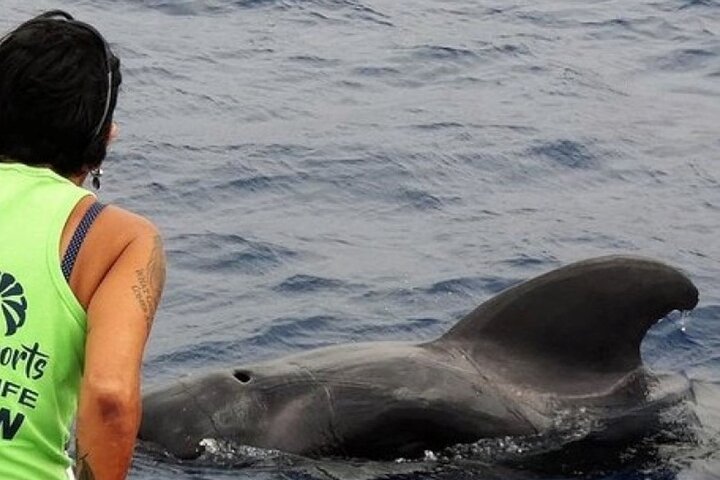
- Calmer seas: The Atlantic trade winds typically pick up around midday. In the morning, especially between 9 AM and 11 AM, the sea surface is at its flattest. This matters for comfort (less seasickness), for spotting (flat water makes dorsal fins and blows visible from further away), and for photography (no spray, no chop, clean reflections). The difference is especially pronounced in winter, when afternoon swells can reach two metres.
- Better light for photography: The golden hour doesn't end at sunrise, the low angle of the morning sun (between 9 and 10 AM) casts warm, directional light across the water. It illuminates the whales' bodies rather than washing them out. By midday, the sun is directly overhead and creates harsh glare that makes it difficult to see beneath the surface. If you're bringing a camera, the morning departure is the difference between magazine-quality shots and squinting at silhouettes.
- Fewer boats on the water: The 9 AM departure is the first of the day. You're ahead of the 11 AM and 1 PM crowds. When a pod of pilot whales is located, the morning boat often has them to itself or shares the area with one or two other vessels. By the afternoon, there can be a dozen boats clustered around the same pod. More boats mean more engine noise, more disturbance, and less intimate sightings.
- More active whales: Pilot whales in Tenerife tend to be more active at the surface in the morning. I've discussed this with marine biologists, and the prevailing theory is that they rest or feed at depth during the warmer afternoon hours. In the morning, they're more likely to be logging at the surface (resting), socialising, or travelling, all of which means more visible activity for you.
- Cooler temperatures: Tenerife's summer temperatures regularly hit 30°C by late morning. On a catamaran deck with no shade, that's intense. Morning departures are significantly cooler and more comfortable, especially for children and elderly passengers.
- Less crowded boats: Most tour operators offer their 9 AM and 11 AM departures first. The afternoon departures fill up with people who couldn't get morning slots. As a result, the morning boats are often less crowded, even if they're the same size. You get more deck space, easier access to the rail, and a more relaxed atmosphere.
Passend for: Photographers, families with children, seasickness-prone visitors, anyone who wants the best possible encounter quality, and anyone who's only doing one whale watching trip in Tenerife.
Afternoon Whale Watching (1–3 PM Departures), The Underdog
I don't want to give the impression that afternoon whale watching is a waste of time. It's not. There are legitimate reasons to choose an afternoon departure, and in some situations it's actually the better option.
- Easier to fit into your schedule: Not everyone is a morning person, especially on holiday. If you're on vacation and the idea of a 9 AM start feels like a punishment, the afternoon departure lets you sleep in, have a leisurely breakfast, and head to the harbour without rushing. Some visitors prefer to spend the morning at the beach or by the pool and save the boat trip for after lunch.
- Warmer conditions for swimming: Most catamaran tours include a swimming stop. In the afternoon, the water has had the full force of the sun on it all day, and the sea temperature is at its warmest. If swimming is a priority for you, the afternoon trip delivers a noticeably more comfortable dip. This is especially relevant in the winter months when morning water temperatures can feel brisk.
- Sunset timing: An afternoon departure that runs from 2 PM to 5 PM or 3 PM to 6 PM will end around sunset. If you time it right, you'll watch the sun sink below the Atlantic as you return to harbour, with the silhouette of La Gomera or the Los Gigantes cliffs in the background. That's a genuinely memorable end to a day on the water, and it's the one advantage that morning cannot replicate.
- Dolphin activity can increase: Some skippers I've spoken to report that dolphin pods are more active and playful in the afternoon, especially common and bottlenose dolphins. The theory is that dolphins spend the morning feeding and become more social in the afternoon. If dolphins are your priority (rather than pilot whales), the afternoon trip might actually be better.
- Still a 95%+ sighting rate: Let's be clear: you will still see whales in the afternoon. Tenerife's resident pilot whale pod doesn't disappear after lunch. The encounters may be slightly less intimate, the ride may be bumpier, and the light may be harsher, but you'll still almost certainly see pilot whales, and likely dolphins too. The afternoon is not a bad option, it's just not the best one.
Passend for: Non-morning people, visitors who prioritise swimming in warm water, sunset lovers, those doing multiple whale watching trips who want a different perspective, and anyone constrained by schedule.
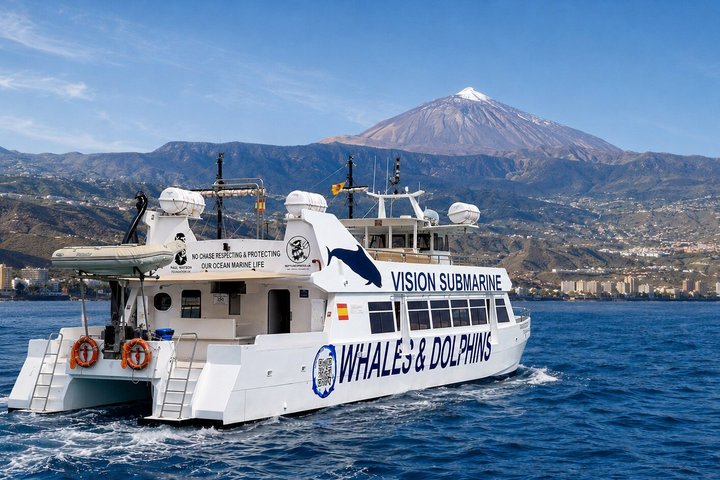
Side-by-Side Comparison, Morning vs Afternoone.
| Factor | Morning (9–10 AM) | Afternoon (1–3 PM) |
|---|---|---|
| Sea conditions | Calm, flat, trade winds haven't picked up | Choppy, trade winds create metre+ swell |
| Light quality | Golden, directional, excellent for photos | Harsh overhead light, strong glare |
| Boats per pod | 1–3 boats typically | 5–12 boats in peak season |
| Pilot whale activity | Higher, more surface logging and socialising | Lower, whales often deeper, less surfacing |
| Dolphin activity | Moderate, more feeding-focused | Higher, more social and playful |
| Seasickness risk | Low, calm seas, gentle ride | Moderate-High, swell is significant |
| Boat crowd level | Less crowded, early birds get space | More crowded, boats fill up |
| Swimming conditions | Cooler water, refreshing | Warmer water, more comfortable |
| Temperature on deck | Pleasant, 22–26°C in summer | Hot, 28–32°C with direct sun |
| Sunset opportunity | No, trip ends before noon | Yes, late trips finish at sunset |
| Best for | Serious whale watchers, photographers, families, first-timers | Swimmers, sunset lovers, late risers, second-time visitors |
Best Morning Tours
Premium Whale Watching Catamaran with Hydrophone
Best morning departure, 9 AM ⚠ Only 40 spots per tripThis is the tour I book for every friend who visits Tenerife for the first time, always the 9 AM departure. The morning calm makes the hydrophone especially effective (less engine noise means clearer whale vocalisations), and the low-angle light transforms the photography. The marine biologist guide is at her best in the morning, pointing out behaviours that are harder to spot in afternoon glare. The 3-hour duration means you're back at harbour by noon, leaving the afternoon free for lunch and a siesta.
Whale watching RIB
Best morning RIB, calm seas = less sprayIf you're set on a RIB experience, the morning departure is non-negotiable. The RIB is already a bumpy ride; adding a metre of afternoon swell makes it genuinely uncomfortable. The morning calm means you get the speed and proximity of the RIB without the punishing ride. The low sun angle also means better visibility for spotting whales at a distance, which the skipper uses to position the boat before cutting the engine and drifting in quietly.
Best Afternoon Tours
Leaders in Eco Whale & Dolphin
Budget-friendly afternoon optionThis mid-sized catamaran offers a 4-hour afternoon cruise that's popular with visitors who want to combine whale watching with a proper lunch on the water. The included meal saves you finding a restaurant in town, and the swimming stop in the warm afternoon water is a highlight. The crew are experienced with the afternoon conditions and know where to find the whales even when they're deeper. It's a solid backup choice if the morning departures are fully booked.
Quick Verdict, When Should You Book?
Book the 9 AM departure if you possibly can. The calmer seas, better light, fewer boats, and more active whales make it the superior experience for almost everyone. The difference is significant enough that I tell every friend and family member the same thing: wake up early, book the morning trip, thank me later.
Book the afternoon only if: you genuinely cannot face an early start, you're doing two whale watching trips and want to compare the experience, you specifically want a sunset return to harbour, or the morning departures are sold out (which happens regularly in July and August). The afternoon trip is still good, you'll still see whales, but it's a different, more challenging experience.
What About Midday (11 AM) Departures?
The 11 AM departure is the compromise slot. It's late enough that you're not rushing to make a 9 AM boat, but early enough that the trade winds haven't fully kicked in. In practice, the 11 AM departure offers about 70% of the morning's advantages. The light is still reasonable, the sea is still relatively calm, and you're ahead of the main afternoon wave. If 9 AM feels too early but you want better conditions than the afternoon, the 11 AM slot is a solid middle ground. Many operators offer it, and it's my personal recommendation for visitors who can manage a reasonably early start but don't want to set an alarm.
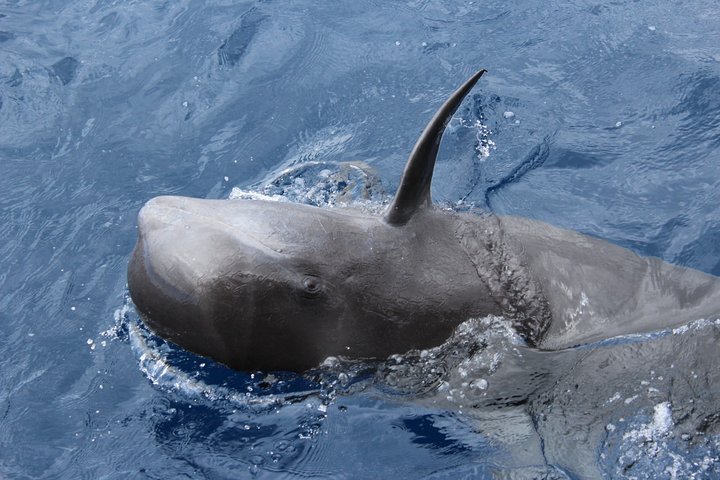
Leaders in Eco Respectful No chase whale and dolphin encounters
Leaders in Eco Respectful No chase whale and dolphin encounters: 2218 reviews, 4.6★. A top-rated Tenerife experience.
Book on Viator →Whale Watching Eco-Adventure from Costa Adeje
Whale Watching Eco-Adventure from Costa Adeje: 2181 reviews, 5.0★. A top-rated Tenerife experience.
Book on Viator →Whale watching and listening Eco-Catamaran Tour with Food Tasting
Whale watching and listening Eco-Catamaran Tour with Food Tasting: 1489 reviews, 4.9★. A top-rated Tenerife experience.
Book on Viator →
Explore More
Related comparisons and guides: