The Day I Understood Both Boats
We earn a commission when you book through our links on Viator, at no extra cost to you. This is how we keep the site free. Learn more →
I've done dozens of whale watching trips off Tenerife's south-west coast, on catamarans, on RIBs, even on a fishing boat once (don't do that). But the comparison crystallised for me in August 2023, when I did a catamaran trip in the morning and a RIB trip that same afternoon. The morning catamaran was relaxed: I had my camera on a tripod, a coffee from the onboard bar, and I was watching a pod of pilot whales through the lens while leaning against the rail. Families were spread across the deck, kids pointing at dolphins, nobody green in the face. That afternoon on the RIB, I was holding on with both hands as we skipped across the swell at 25 knots, spray hitting my sunglasses, and then, suddenly, the engine cut and we were drifting silently, eye-level with a pilot whale calf that surfaced maybe four metres from the boat. I could have reached out and touched the water where it had been. Different experiences entirely. Whale Watching Eco-Adventure from Costa Adeje to compare options and find the best trip for your style. Here's which one you should book.
Catamaran Whale Watching, The Comfort Choice
If you picture whale watching as a relaxed cruise rather than an adrenaline sport, the catamaran is your boat. These twin-hulled vessels are the most stable option on the water, they barely roll in the swell that has RIB passengers clinging to grab rails. I've watched photographers set up tripods on the bow. I've seen toddlers napping on the deck seating. You cannot do that on a RIB.
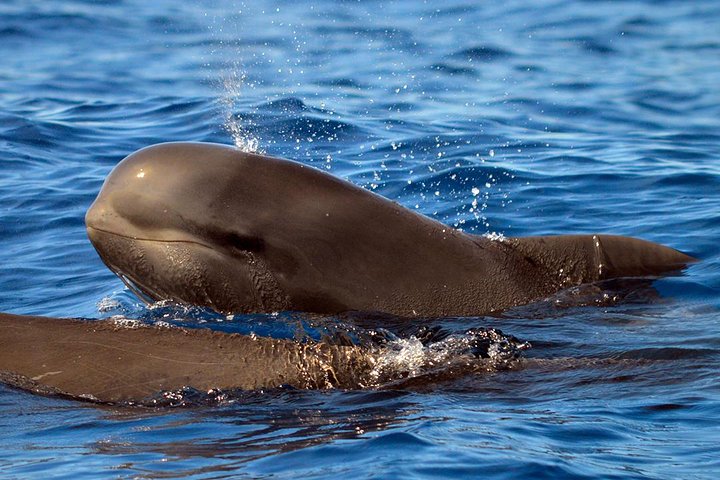
- Stable and comfortable: The twin-hull design cuts through the Atlantic swell. Even in winter months when the sea gets choppy, you'll feel it far less than on a single-hulled boat. If you're prone to seasickness, this is the choice.
- Family-friendly: Space to move around, seating for everyone, and a crew that's used to kids. Most catamarans have shaded areas, essential in Tenerife's summer sun.
- Photography-ready: The stable deck means you can use a zoom lens without stabilisation. On a RIB, you're shooting one-handed while bracing with the other.
- Onboard bar and toilet: Most whale watching catamarans have a bar (soft drinks, beer, sometimes a light lunch included) and a toilet. On a 3-5 hour trip, that matters.
- Capacity: 40–80 passengers, depending on the operator. Budget catamarans run near capacity (80+) in peak season; premium options cap at around 40.
- Price: €38–55 per person, depending on the operator and inclusions.
- Duration: Usually 3–5 hours, with a swimming stop included on longer trips.
I took my parents on a catamaran trip two years ago. My mother is 68 and gets seasick on a ferry crossing. She spent the entire three hours on the upper deck, spotting dolphins with binoculars, and didn't feel a thing. She still talks about it. That's the catamaran advantage in a nutshell.
Recommended catamaran tour: Whale Watching Eco-Adventure from Costa Adeje, marine biologist guide, hydrophone for listening to whales underwater, and capped at 40 passengers.
RIB Whale Watching, The Proximity Choice
A RIB (Rigid Inflatable Boat) is a speedboat with inflatable sides. It's fast, low to the water, and gets you closer to the whales than any catamaran legally can. The trade-off is everything you'd expect: it's loud, bumpy, wet, and you'll be sitting on a bench holding a grab rope for most of the ride. But when the engine cuts and you're drifting at water level beside a pilot whale, the discomfort fades from memory.
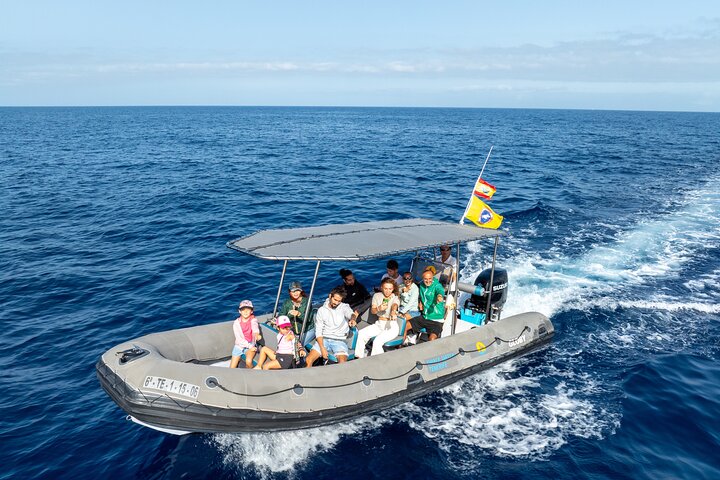
- Speed: RIBs cover more coastline in two hours than a catamaran does in three. You'll reach the whale grounds faster and spend more time with the animals.
- Proximity to whales: The low profile means you're at eye level with the water. When a pilot whale surfaces beside the boat, you're looking at it, not down at it from a deck. This is the closest you'll get to a whale in Tenerife without getting in the water.
- Small groups: Maximum 12 passengers. No crowds, no jostling for rail space, no selfie sticks in your line of sight. Just you, the skipper, and the ocean.
- Eye-level experience: You're sitting maybe half a metre above the waterline. The whales feel bigger because you're smaller, a pilot whale bull at eye level is an intimidating sight.
- Price: Around €70 per person. More expensive than a catamaran, but you're paying for the exclusivity and proximity.
- Bumpy ride: Let's be honest, at 25 knots across the Atlantic swell, you will feel every wave. You will get sprayed. If the sea is rough, it's a workout. Take seasickness medication 30 minutes before departure.
One morning in June, I was on a RIB with a skipper named Carlos who's been running these trips for 18 years. He spotted a pod of pilot whales about two kilometres out and opened the throttle. We were there in under five minutes, a catamaran would have taken 15. Carlos cut the engine 50 metres out and we drifted closer. A female pilot whale with a calf surfaced right alongside us, close enough that I could see the scar on her dorsal fin. The calf rolled on its side to look at us. That moment, eye level, silent, close enough to hear the whale breathe, is something a catamaran deck just cannot deliver.
Recommended RIB tour: Whale watching RIB, max 12 passengers, licensed skippers, 2 hours of high-speed whale watching.
Catamaran vs RIB, Side-by-Side Comparison:
| Feature | Catamaran | RIB / Speedboat |
|---|---|---|
| Price | €38–55 | ~€70 |
| Capacity | 40–80 passengers | Max 12 passengers |
| Stability | Very stable, twin hull cuts through swell | Bumpy, you feel every wave at speed |
| Closeness to whales | From elevated deck, good views, less intimacy | Eye-level with water, closest legal approach |
| Speed to whale grounds | Slower, 15–20 minutes to reach pods | Fast, 5 minutes at 25 knots |
| Onboard facilities | Bar, toilet, shaded seating | None, you're on a bench with a grab rope |
| Duration | 3–5 hours | 2 hours |
| Best for | Families, photographers, seasickness-prone, relaxed cruisers | Adventure seekers, proximity-focused, small groups |
| NOT for | Adrenaline junkies, intimate small-group seekers | Seasickness-prone, young children, elderly, pregnant women |
Quick Verdict
Catamaran for comfort and families. RIB for adventure and proximity. If you want a relaxed cruise with a drink in hand, decent photos, and no seasickness panic, book the catamaran. If you want to be eye-level with a pilot whale and don't mind getting bounced around and sprayed, book the RIB. There is no wrong answer, only the wrong boat for your travel style.
Who Each Boat Is NOT For
The Catamaran Is NOT For You If…
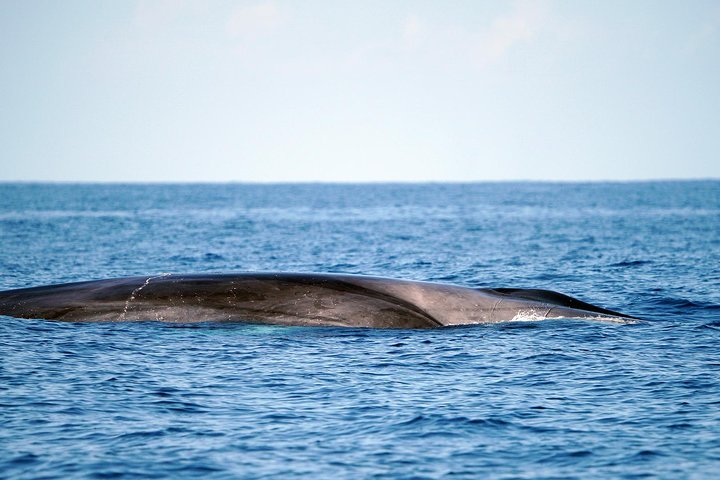
- You want close-up, eye-level encounters: A catamaran deck sits 2–3 metres above the waterline. You'll see whales, but you'll be looking down at them from a distance. If you've seen National Geographic footage of whales at water level and want that perspective, the catamaran won't deliver it.
- You want a small, intimate group: Even premium catamarans carry 40 people. Budget ones carry 80+. If crowds bother you, the RIB's 12-passenger maximum is night and day different.
- You're an adrenaline seeker: Catamarans cruise. They don't accelerate, they don't bank into turns, and they don't skip across waves. If you want to feel the Atlantic rather than float on it, this isn't your boat.
- You're on a tight schedule: Catamaran trips are 3–5 hours. If you only have a morning free and want to pack in whale watching plus something else, the 2-hour RIB fits better.
The RIB Is NOT For You If…
- You're prone to seasickness: Even on calm days, the RIB bounces. On rough days, it's a rollercoaster. Take medication if you must, but if you know you get sick on boats, save yourself and book the catamaran.
- You're travelling with young children: Most RIB operators set a minimum age, usually 6 or 8. Even for older children, the ride is physically demanding. There are no toilets, no shade, and no space to move around.
- You have back, neck, or mobility issues: The RIB ride compresses your spine with every wave. I'm 38 and in decent shape, and after a rough two-hour trip I feel it. If you have any back concerns, the catamaran is the only sensible option.
- You're pregnant: Many RIB operators explicitly recommend against pregnant passengers due to the bumpy ride. Catamarans are safe and comfortable throughout pregnancy.
- You want a relaxed, social experience: On a RIB you're sitting single-file on a bench, wearing a life jacket, holding a rope, and shouting over the engine. On a catamaran you can walk around, chat, have a drink, and use the toilet. They're different vibes entirely.
- You want to take quality photos: The combination of speed, spray, and constant motion makes serious photography nearly impossible on a RIB. Phone snapshots, yes. A DSLR with a telephoto lens, no.
Still Undecided? Try the Middle Ground
If the catamaran feels too crowded but the RIB feels too extreme, there's a third option: small-group sailing yachts. These carry around 12 passengers like a RIB, but offer the comfort and stability of a sail-driven vessel. They're quieter than motorised boats (the whales seem to prefer them), and the experience is more intimate than a catamaran without the physical punishment of a RIB. Prices run around €72 per person. It's the choice I recommend for couples who want atmosphere over speed, sailing silently toward a pod of pilot whales with the engine off is a genuinely romantic experience.
Recommended sailing tour: Whale watching catamaran, a hybrid option with smaller groups than the budget catamarans.
My Personal Recommendation
After more whale watching trips than I can count, here's my honest take: if you're only doing one whale watching trip in Tenerife, book the premium catamaran with hydrophone. The hydrophone transforms the experience, hearing pilot whales click and whistle underwater while watching them surface is something you'll remember long after the sunburn fades. The marine biologist guide adds depth that a standard skipper cannot match. And the catamaran's stability means you can actually enjoy the encounter rather than bracing yourself through it.
But if you've done whale watching before, if you want something different, if you want to feel the Atlantic and see whales from water level, book the RIB. It's a more intense, more memorable, more thrilling experience. Just take the seasickness pill 30 minutes before, leave the DSLR at home, and hold on.
Either way, you're almost guaranteed to see whales, Tenerife's 95%+ sighting rate is the highest in Europe. The resident pilot whale pod doesn't migrate; they're here year-round. The question isn't whether you'll see whales. It's how you want to experience them.
Whale and Dolphin Watching Catamaran with Transfer and Buffet
Whale and Dolphin Watching Catamaran with Transfer and Buffet: 2805 reviews, 4.8★. A top-rated Tenerife experience.
Book on Viator →Whale Watching Eco-Adventure from Costa Adeje
Whale Watching Eco-Adventure from Costa Adeje: 2181 reviews, 5.0★. A top-rated Tenerife experience.
Book on Viator →Whale watching and listening Eco-Catamaran Tour with Food Tasting
Whale watching and listening Eco-Catamaran Tour with Food Tasting: 1489 reviews, 4.9★. A top-rated Tenerife experience.
Book on Viator →
Explore More
Related comparisons and guides: