Why This Matters, The Resident Pod Needs Protectione.
© 2026 Tenerife Outdoor Guide. All rights reserved. As an affiliate partner of Viator, I may earn a commission on bookings made through my links.
We earn a commission when you book through our links on Viator (PID P00303273), at no extra cost to you.
Tenerife's south-west coast is home to a resident population of around 500 short-finned pilot whales (Globicephala macrorhynchus). Unlike migrating whales that pass through and move on, these animals live here year-round in the waters between Tenerife and La Gomera. They feed, breed, and socialise in the same stretch of ocean where dozens of whale watching boats operate daily. I recommend the Whale Watching Eco-Adventure from Costa Adeje for an ethical tour that respects the animals' space.This is rare. Most whale watching destinations rely on seasonal migrations. Tenerife has residents, which means the same individuals face boat traffic every single day. A migrating whale passes through and gets a break. A resident pilot whale in Tenerife encounters boats 365 days a year. The cumulative stress from engine noise, close approaches, and pursuit has been documented to disrupt feeding, change diving behaviour, and affect communication between pod members.
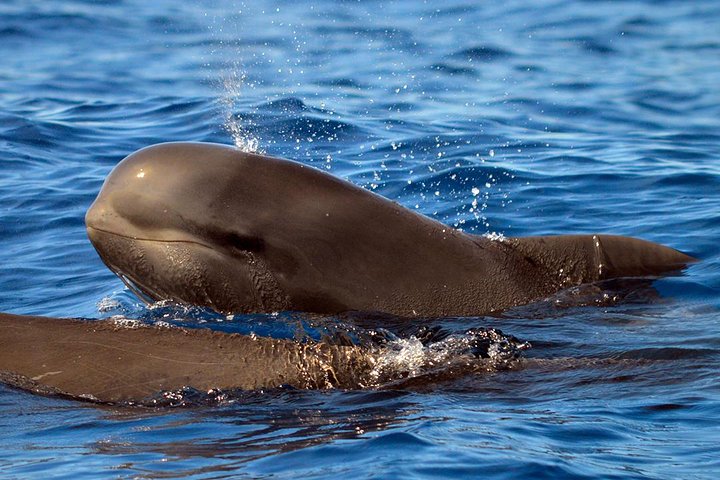
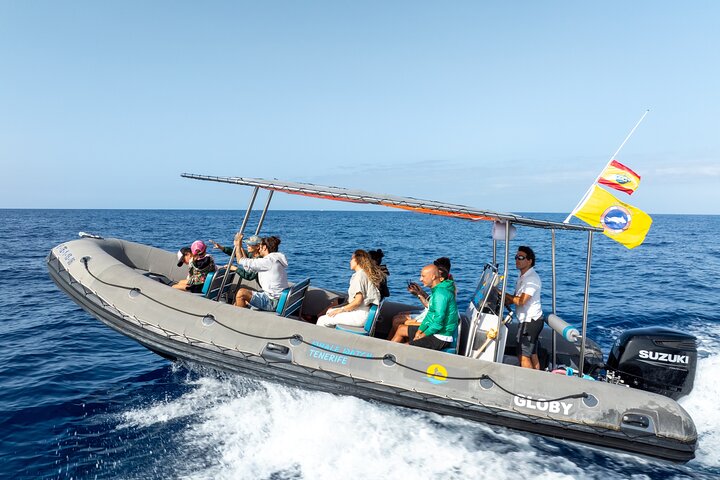
I have spent 10 years watching these whales. I have seen operators do it right: cutting engines 100 metres out and drifting in silence, giving the whales space to choose whether to approach. I have also watched operators do it wrong: chasing pods at speed, encircling them, letting multiple boats crowd a single group. The difference is visible in the whales' behaviour. A relaxed pod logs at the surface and continues feeding. A stressed pod dives deep and resurfaces three kilometres away. Choose the right operator and your presence does not harm them. Choose the wrong one and you are part of the problem.
The Legal Framework, What the Law Requires
Whale watching in the Canary Islands is regulated by Royal Decree 1727/2007, which sets binding rules for cetacean observation. These are not guidelines. They are law, enforced by the Spanish Civil Guard and the Canary Islands government. Any operator claiming to run whale watching tours must comply.
| Rule | Requirement | Why It Matters |
|---|---|---|
| Minimum approach distance | 60 metres, no vessel may approach within 60m of any cetacean. 100m+ recommended for mothers with calves. | Protects whales from collision, engine noise, and stress. Closer approaches require the whale to initiate contact. |
| No pursuit or chasing | Boats must not pursue, chase, or intercept the path of cetaceans. If the animals move away, the boat must not follow. | Pursuit forces whales to change direction, waste energy, and disrupt feeding. A chasing boat signals a disrespectful operator. |
| No encircling | Vessels must not surround, trap, or separate cetaceans from their group. Only one boat within 300m at a time. | Pilot whales are highly social. Separating a calf from its mother causes real distress. Multiple boats surrounding a pod traps them. |
| Engine protocol | Engines must be in neutral or off within 200m. No sudden acceleration or direction changes near cetaceans. | Engine noise interferes with echolocation. Reducing speed and cutting engines lets whales behave naturally. |
| Time limit | Maximum 60 minutes with any single group of cetaceans. After 60 minutes, the boat must leave and not return for at least 30 minutes. | Prevents prolonged harassment of the same pod. Different boats can take turns, creating cumulative impact. |
| Swimming prohibited | Swimming with whales or dolphins is prohibited in Canary Islands waters unless specifically authorised for scientific research. | Human contact alters natural behaviour and can transmit diseases. Any operator offering swim-with-whales is breaking the law. |
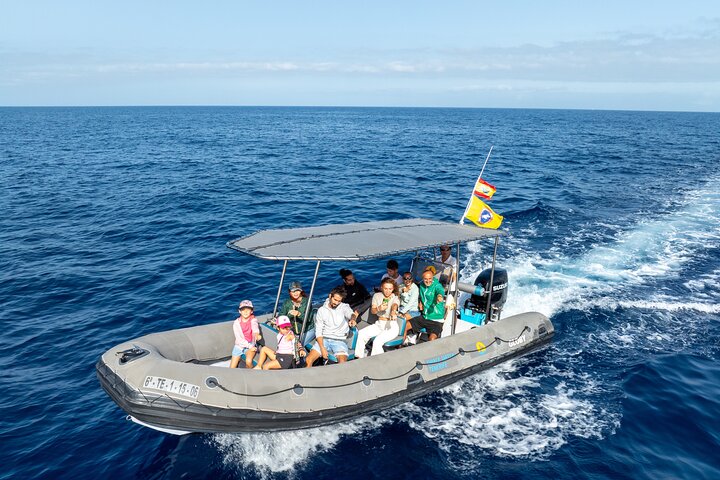
| Vessel certification | Boats must hold an authorised whale watching permit displayed on board. Only certified vessels may operate. | Permits limit the number of active vessels. An uncertified operator has bypassed the capacity control system. |
Source: Boletín Oficial del Estado, Real Decreto 1727/2007. These requirements apply to all commercial whale watching vessels in the Canary Islands.
Operator Red Flags, What to Watch For Before You Book
Not all operators follow the rules. In 10 years of guiding on Tenerife, I have learnt to spot the difference between a conscientious operator and one who treats the whales as a product. Here is what to check before you click "book."
| Signal | Responsible Operator | Red Flag Operator |
|---|---|---|
| Guide expertise | Employs a marine biologist or naturalist guide. Crew can answer specific questions about pilot whale behaviour and local research. | No guide, or guide gives generic "whales are beautiful" commentary. Cannot name the species or explain their behaviour. |
| Hydrophone | Carries an underwater microphone (hydrophone) and uses it during the tour. Actively explains what you are hearing. | No hydrophone. "We don't need one, you can see them from the surface." The hydrophone means investment in education, not just sightseeing. |
| Group size | Caps the tour at 40 passengers (catamaran) or 12 passengers (RIB). Smaller groups mean less cumulative noise and disruption. | Packs 80+ passengers onto a catamaran. Multiple groups per day. No capacity limit mentioned on the booking page. |
| Engine use | Cuts engines 100m+ from whales. Drifts in silence. Uses sails or drifts, not power, to maintain position. | Keeps engines running throughout. Revs near pods. Moves quickly between groups instead of staying with one pod at low speed. |
| Departure time | Departs 9-10 AM. Calmer seas, fewer boats, less cumulative stress on the resident pod. | Runs multiple departures per day including afternoon slots through peak boat traffic. Does not mention timing as a welfare factor. |
| Marketing language | "Respectful approach," "passive observation," "hydrophone," "marine biologist guide." Language focuses on the experience, not the spectacle. | "Get close to the whales," "thrilling encounter," "up close and personal," "guaranteed sightings." Language treats whales as entertainment. |
| Cancellation policy | Free cancellation 24h ahead. Will reschedule based on sea conditions. Puts animal welfare over profit. | No cancellation or strict penalties. Runs regardless of conditions. |
| Certification visible | Displays whale watching permit number or references compliance with Royal Decree 1727/2007 on website. | No mention of permits, certifications, or regulations. Vague "we follow guidelines" without specifics. |
Vessel Type and Ethical Impact
Not all boat types have the same impact on whales. The vessel you choose affects how much stress the encounter creates for the animals. Here is the ethical breakdown.
| Vessel | Noise Impact | Engine Protocol | Crowd Factor | Ethical Score | Best Ethical Choice For |
|---|---|---|---|---|---|
| Catamaran (hydrophone, capped) | Lower, twin hulls need less power at idle. Quiet in drift mode. | Can cut engines and drift for extended periods. Stable at rest. | 40 pax max | Best | Travellers who want comfort and education. The hydrophone reduces impact by keeping distance while enhancing the experience. |
| Sailing yacht | Lowest, wind-powered approach. Silent under sail. | Can approach under sail with zero engine noise. Quietest option available. | 12 pax max | Best | Couples and small groups who prioritise atmosphere and have some sea legs. |
| RIB / Speedboat | Higher, engine noise at low speed is significant. Outboard motors carry sound underwater. | Must cut engine to drift. Noisier at idle than inboard engines. | 12 pax max | Moderate | Adventure seekers who still want ethics. Choose one that cuts engines 100m+ out. |
| Large catamaran (80+ pax) | Moderate, larger engines, but higher cumulative noise. | Can drift but less manoeuvrable. More likely to maintain engine idle to hold position. | 80+ pax | Low | Not recommended. High cumulative impact from crowd noise and engine idle. |
| Jet ski | Highest, jetski whale watching is illegal in Canary Islands waters. | N/A | N/A | Illegal | Avoid entirely. No legal operator offers this. Report it if seen. |
What You Can Do as a Visitor
- Book morning departures. The sea is calmest at 9-10 AM, and fewer boats on the water. Midday and afternoon departures overlap with peak boat traffic.
- Ask before you book. Send a message: "Do you use a hydrophone? Do you have a marine biologist on board? How close do you get?" If the operator cannot answer clearly, book elsewhere.
- Choose smaller vessels. Smaller groups mean less noise, less crowding, and a more respectful encounter.
- Choose hydrophone-equipped tours. A hydrophone is a strong signal that the operator invests in education and a passive experience.
- Do not support swim-with-whales operators. Swimming with cetaceans is illegal in the Canary Islands.
- Skip afternoon departures in peak season (June-September). The cumulative stress on the resident pod is highest after noon.
Premium Whale Watching Catamaran with Hydrophone (€55), Marine biologist guide, hydrophone, capped at 40 passengers, engines cut before approach. The best balance of experience and ethics on Tenerife's south coast. Whale Watching Eco-Adventure from Costa Adeje
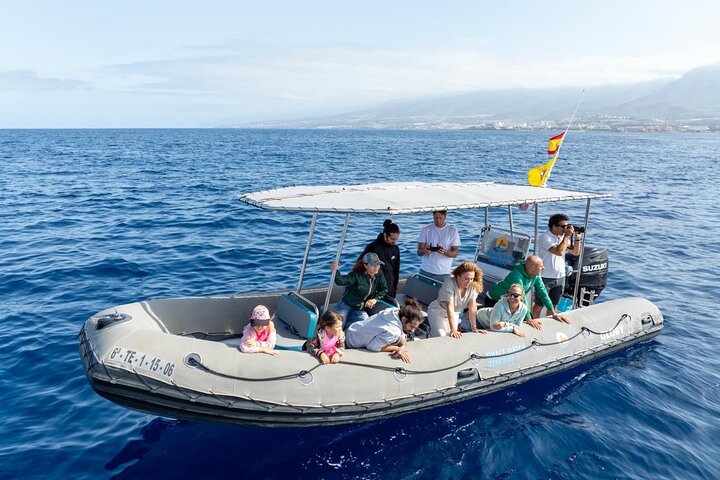
Whale Watching Eco-Adventure from Costa Adeje
2181 reviews · 5.0 stars
Whale Watching Eco-Adventure from Costa Adeje, 2181 verified reviews, 5.0★ average rating.
Book on Viator →Explore More
Related comparisons and guides: