I Did Both: Where They Really Differ
I've logged over 200 hours on the water between Tenerife and La Gomera. I've stood on the deck of a 50-person catamaran watching a sperm whale dive, tail up, gone, while someone behind me asked if we'd seen anything yet. I've also been 3 meters from a bottlenose dolphin in a 12-person RIB, close enough to see the scratches on its dorsal fin. Same channel, same morning, radically different experiences.
We earn a commission when you book through our links on Viator, at no extra cost to you. This is how we keep the site free. Learn more →
The question of whale watching vs dolphin watching in Tenerife isn't really about which animal is better. It's about what you want from the time on the water. I've done both on the Whale Watching Eco-Adventure from Costa Adeje, and the experiences couldn't be more different. Most booking sites won't tell you the difference because they sell both.
Let me break it down from the deck.
The Whale Watching Experience
The first time I booked a proper whale-focused tour, I went with a small-group operator out of Puerto Colón. The boat was a 12-person rigid inflatable (RIB), not a catamaran. Departure was 09:00, the only slot that makes sense. The guide, a marine biologist named Elena, briefed us before we left the harbour: "We're looking for pilot whales resident in the channel, and if we're lucky, a sperm whale on its way to deeper water. But we don't chase. We wait."
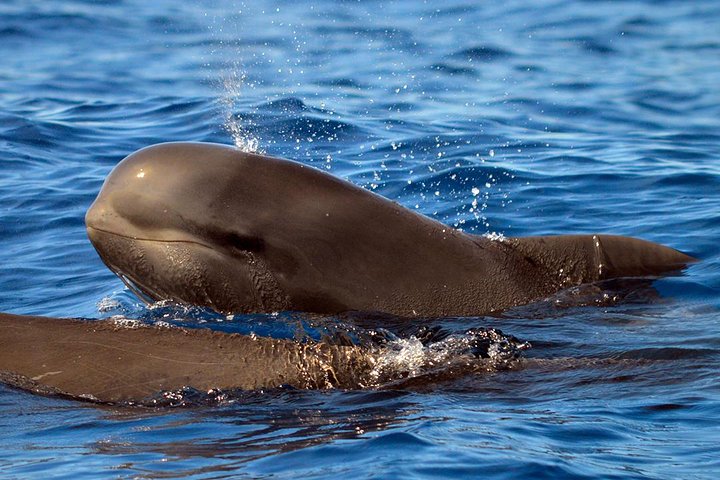
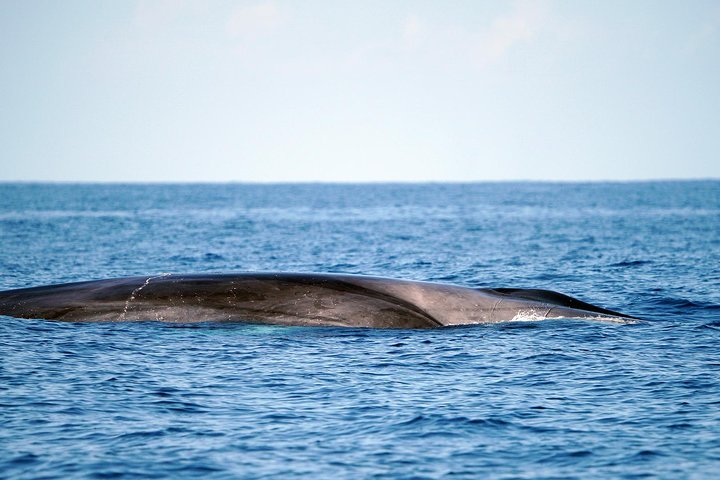
That's the first thing to understand about whale watching in Tenerife. The resident pilot whale population, about 500 animals, lives in the channel between Tenerife and La Gomera year-round. They're not migrating through. They live there. That means sighting rates are over 90% on any given trip. But the experience is different from dolphins. Whales spend more time underwater. You'll see them surface, blow, maybe show a tail, then they're gone for 10-15 minutes. The moments are fewer, but when they happen, they're quiet and huge.
The morning I'm thinking of specifically: we found a pod of 6 pilot whales at 09:45. The boat cut the engine. We drifted. For 8 minutes, nothing. Then a female surfaced 15 meters off the starboard side, calf right next to her. The exhalation, that punch of warm, fishy air, was the only sound. Nobody on the boat spoke. Elena whispered the pod's history: she'd been tracking this same matriline for 3 years. That's the whale watching experience. It's not a show. It's an encounter with something that doesn't care you're there.
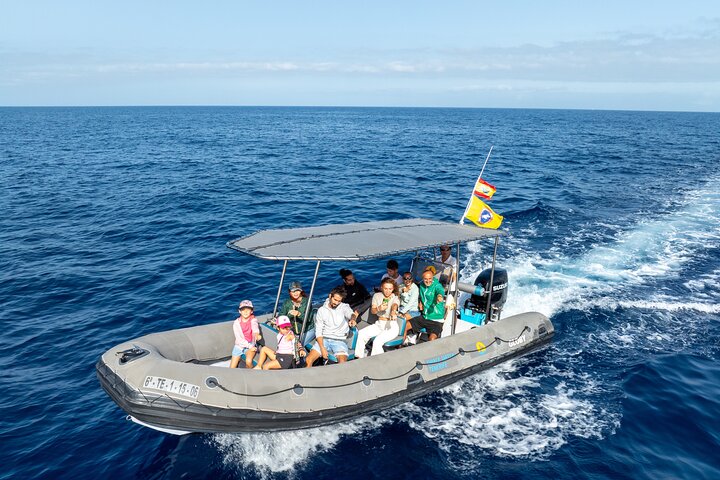
Who it's NOT for: Families with young children under 10 who need constant action. Kids get bored during the waiting periods. Also not for anyone prone to seasickness on smaller boats, the RIBs feel every swell. And if your main goal is photos you can post immediately, the whale moments are too brief and too distant for phone cameras.
Why I Almost Stopped After the Whale Tour
I almost stopped there. The whale tour was the kind of experience that makes you feel small in the right way. But I had to do the dolphin tour too, for the comparison, and because my own bias needed checking.
The dolphin tour I booked was a different operator out of Los Cristianos harbour. Same 09:00 departure, but this was a 15-person catamaran with a sun deck and a bar. The guide was a young guy named Marcos who'd been doing this for 4 years. His approach was different from Elena's: "We'll find them fast. Dolphins are surface animals. They're playing, feeding, socialising. You won't wait long."
He was right.
The Dolphin Watching Experience
Within 20 minutes of leaving the harbour, we had a pod of 40+ bottlenose dolphins riding the bow wave. They weren't just there, they were performing. Leaping, spinning, slapping the water with their tails. A mother pushed her calf to the front of the wave, teaching it to ride. The calf was clumsy, veering off, coming back. People on the boat were laughing, shouting, phones out. It was a completely different energy from the whale tour.
Here's the key difference: dolphins are surface animals. They spend 80% of their time in the top 10 meters of the water column. They're social, curious, and they actively approach boats. On that trip, we had dolphins around us for 45 minutes straight. Not in pulses, continuous. The boat didn't have to search. The dolphins came to us.
The dolphin watching catamaran tour I took also included a snorkelling stop at a cove near Los Gigantes. The water was clear, the cliffs rose 600 meters above us, and the guide pointed out a turtle from the boat. The whole trip was 3 hours, and the dolphin portion alone was worth the price. But here's the tradeoff: the boat had 40 people on it. The bow was crowded. The best spots, the front and the sides, were taken within minutes. I spent part of the dolphin encounter watching the backs of other people's heads.
Who it's NOT for: Anyone who wants a quiet, contemplative experience. Dolphin tours are social events. Music plays. People talk. The guide narrates constantly. Also not for photographers who want clean shots without other tourists in the frame, the small-group RIBs for dolphin watching are better, but they're harder to find. And if you're the type who finds "performing" animals uncomfortable (some people do), the dolphin tour's energy might feel more like a theme park than a wildlife encounter.
The Moment I Made My Decision:
I spent a week going back and forth. Then I took a group of friends out on a combined tour, a 4-hour trip that promised both whales and dolphins. The boat was a 20-person catamaran, mid-size, comfortable. Departure was 09:00 from Puerto Colón. We saw pilot whales first, around 10:15. A pod of 8, including a newborn. The mother was holding the calf at the surface, teaching it to breathe. We watched for 15 minutes in silence. Then, on the way back, a pod of common dolphins intercepted us. They rode the wake for 20 minutes, leaping, spinning, one juvenile doing a full backflip. We got both experiences in one trip.
That's when I realised: the question of whale watching vs dolphin watching in Tenerife is a false binary. The best answer is a combined tour that gives you both. But you have to choose the right boat. The 80-person catamarans are too big, the whales avoid them and the dolphins are harder to see from the middle of the deck. The 8-person RIBs are too small for comfort on a 4-hour trip. The sweet spot is a 15-20 person catamaran with a knowledgeable guide who knows where the resident pilot whales are and can read dolphin behaviour well enough to position the boat.
If I had to pick one over the other, here's my honest take: if you want guaranteed smiles and a fun morning, do the dolphin tour. Dolphins deliver. They're reliable, entertaining, and they make everyone happy. If you want a story you'll tell for years, the kind where you describe the silence, the size, the tail, do the whale tour. But if you can afford both, book the combined trip. It's not that much more expensive, and you get the contrast. The quiet awe of the whale, then the joy of the dolphin. That's the full spectrum of what Tenerife's channel offers.
What I Wish I'd Known Before I Went
I've made every mistake you can make on these waters. Here's what I learned the hard way:
- The 09:00 departure is non-negotiable. The trade winds pick up by 13:00, and the channel between Tenerife and La Gomera gets genuinely choppy. A 2-hour tour at 09:00 is calm. The same tour at 14:00 is a bouncing, wet, nausea-inducing experience. Every operator knows this. Some still sell afternoon slots because tourists don't. Book the morning.
- Boat size matters more than the brochure says. The €20 boats pack 80+ people. You'll see the animals, but from behind 4 rows of people with selfie sticks. The €40-60 small-group boats (8-15 people) with marine biologists are a completely different experience. I've done both. The difference isn't marginal, it's the difference between feeling like a spectator and feeling like a participant.
- Check the wind forecast, not just the weather app. A sunny day with 25km/h wind is a miserable boat ride. Use windfinder.com or ask the operator before booking. If the wind is over 20km/h, reschedule.
- Dolphins are guaranteed, whales are not. The resident pilot whales are seen on 90%+ of trips, but "seen" can mean a distant blow and a tail. Dolphins are seen on ~95% of trips and they're usually close. If you need certainty, choose dolphins. If you're okay with a 10% chance of seeing nothing, choose whales.
- The best whale watching spot on land is Punta de Teno. You can hike the coastal trail and watch pilot whales from the cliffs. I've done it. It's not as close as a boat, but it's free, and you're not on a boat. Bring binoculars.
- Book early in your trip. Weather can cancel tours, especially in winter. If you book on your last day and it's cancelled, you're out of luck. Book on day 2 or 3 so you have reschedule buffer.
- Motion sickness medication works, but take it 30 minutes before departure, not at the dock. I've seen people take Dramamine as the boat leaves. By the time it kicks in, they're already green.
One more thing: the combined tours that include both whales and dolphins are often sold as "whale watching" tours because that's the bigger draw. Read the description carefully. If it says "pilot whales and dolphins" in the itinerary, you're getting both. If it just says "whale watching," you might only get whales. The best whale and dolphin watching catamaran tours explicitly mention both species in the title.
And if you're still torn: do the combined tour. You'll have the quiet moment with the whale, then the joy of the dolphins. That's the real Tenerife marine experience, not one or the other, but both.
Whale Watching Eco-Adventure from Costa Adeje
Whale Watching Eco-Adventure from Costa Adeje: 2181 reviews, 5.0★. A top-rated Tenerife experience.
Book on Viator →Whale and Dolphin Watching Catamaran with Transfer and Buffet
Whale and Dolphin Watching Catamaran with Transfer and Buffet: 2805 reviews, 4.8★. A top-rated Tenerife experience.
Book on Viator →Leaders in Eco Respectful No chase whale and dolphin encounters
Leaders in Eco Respectful No chase whale and dolphin encounters: 2218 reviews, 4.6★. A top-rated Tenerife experience.
Book on Viator →Frequently Asked Questions
Is this tour suitable for beginners?
Most tours on this site welcome beginners. Check the individual tour page for difficulty ratings and fitness requirements.
Which is more reliable, whale watching or dolphin watching in Tenerife?
Dolphins are more reliably seen at close range. They're surface animals and actively approach boats. Pilot whales are seen on 90%+ of trips but often at a distance. If you need guaranteed close encounters, choose dolphins. If you're okay with a more distant, contemplative experience, whales are fine.
What's the best time of day for whale watching in Tenerife?
09:00 departure, every time. The trade winds pick up by 13:00, making the channel choppy. Morning tours are calmer, whales are more active (they feed in the morning), and you avoid afternoon heat. I've done both slots, the difference is night and day.
Can you see whales and dolphins on the same tour in Tenerife?
Yes. Many operators offer combined tours that target both. The resident pilot whales and common/bottlenose dolphins share the same channel. A 4-hour combined tour with a good guide will usually find both. Look for tours that explicitly mention both species in the itinerary.
What's the difference between a catamaran and a RIB for whale watching?
Catamarans are more stable and comfortable, especially for families and anyone prone to seasickness. They're also bigger, often 40-80 people. RIBs (rigid inflatable boats) are smaller (8-15 people), faster, and get you closer to the animals, but they're bumpier. For a combined tour, a 15-20 person catamaran is the sweet spot.
Is whale watching in Tenerife worth it for kids?
For kids under 10, a dolphin-focused tour is better. Dolphins are active, close, and entertaining, they leap, spin, and ride bow waves. Whale watching involves long periods of waiting, which younger children find boring. For teens and adults, whales offer a more awe-inspiring experience.
What should I bring for a whale watching tour in Tenerife?
Sunscreen (even on cloudy days, the sun reflects off the water), a windbreaker or light jacket (it's 5-10°C cooler on the water), sunglasses with a strap, a camera with a zoom lens (phone cameras won't capture distant whales), and motion sickness medication if you're prone. Most tours provide drinks and snacks, but bring your own water.
Explore More
Related comparisons and guides: